These Caramelized Slow Roast Asian Beef Short Ribs deliver melt-in-your-mouth tenderness with a sticky, deeply flavored glaze that’s built through a two-stage browning process—initial searing triggers savory reactions, while the final high-heat finish with brown sugar creates true caramelization for unbeatable depth.

There’s something magical about the way these short ribs transform in the oven. They start as humble, tough cuts of meat and emerge hours later as fall-off-the-bone tender jewels, lacquered in a sticky, sweet, and savory glaze that’s simply irresistible. Served alongside a scoop of fluffy jasmine rice to soak up every last drop of that delicious sauce, this dish is pure comfort and sophistication all in one. It’s the kind of meal that makes the whole house smell incredible and gathers everyone around the table in happy silence.
Jump to Section
Key Takeaways
- The Science of Flavor: This recipe harnesses both protein browning at lower temps and sugar caramelization at 320-360°F to build layers of complex, restaurant-quality flavor that most home recipes miss.
- The 3-Stage Method: Following a proven framework—marination for tenderizing, slow braising for collagen conversion at 195-205°F, and high-heat glazing for that signature sticky finish—guarantees perfect results every time.
- Cut Selection Matters: Choosing English-style short ribs with good marbling (visible white streaks of intramuscular fat) and understanding membrane removal makes the difference between tough, disappointing meat and fork-tender perfection.
- Make-Ahead Friendly: These short ribs actually taste better the next day as flavors meld overnight, making them ideal for stress-free entertaining or weekly meal prep.
For another comforting Asian-inspired meal, you’ll love our Chicken Stir Fry Recipe.
Why You’ll Love This Caramelized Slow Roast Asian Beef Short Ribs
- Restaurant-Worthy Without the Price Tag: You get that luxurious, fall-apart texture and deeply caramelized crust you’d find at high-end steakhouses, all made in your home kitchen with affordable short ribs.
- Incredible Flavor Complexity: The combination of soy sauce amino acids, brown sugar, sesame oil, and aromatic ginger creates layers upon layers of sweet, savory, and umami richness that coat every bite.
- Hands-Off Cooking: After the initial prep and searing, your oven does all the heavy lifting for 3 hours while your house fills with the most incredible aroma.
- Impressively Tender: The slow braising process transforms tough connective tissue into silky gelatin, creating meat so tender you can literally cut it with a spoon.
- Flexible Cooking Methods: Whether you prefer traditional oven-braising, set-it-and-forget-it slow cooker convenience, or lightning-fast pressure cooking, this recipe adapts to your schedule and equipment.
- Perfect for Entertaining: These short ribs can be made a full day ahead, refrigerated (which makes it easy to skim off excess fat), and reheated with the glaze for company-ready presentation.
Craving more Asian flavors? Our Creamy Italian Sausage Pasta brings similar comfort in a completely different style.
The Rich History Behind Asian Braised Short Ribs
Beef short ribs have an absolutely fascinating culinary journey that spans continents and centuries. In Korean cuisine, these ribs—known as galbi or kalbi—have been a celebratory dish for special occasions since the Joseon Dynasty. The traditional method involves marinating flanken-cut ribs in a mixture of soy sauce, Asian pear (which contains natural tenderizing enzymes), garlic, and sesame oil before grilling over high heat.
Meanwhile, in Chinese cooking, braised short ribs follow the ancient “red cooking” technique, where meats are slowly simmered in soy sauce, Shaoxing wine, star anise, and rock sugar until the braising liquid reduces to a mahogany-colored glaze. This method dates back hundreds of years and was perfected to transform cheaper, tougher cuts into luxurious, melt-in-your-mouth delicacies.
What’s particularly brilliant about short ribs is that they’re cut from the lower portion of the cow’s rib cage—an area that works hard during the animal’s life, which means lots of connective tissue and intramuscular fat (marbling). While this makes them tougher when cooked quickly, it’s precisely what makes them perfect for low-and-slow cooking. As the collagen breaks down over hours of gentle heat, it transforms into gelatin, which gives the meat that signature silky texture and adds body to the sauce.
This recipe honors those time-tested Asian traditions while incorporating modern convenience and technique. After testing this method through multiple cooking methods over several seasons—oven, slow cooker, and pressure cooker—I’ve refined it to deliver consistently perfect results that capture all those deep, complex flavors our ancestors developed centuries ago.
For more globally-inspired comfort food, check out our Marry Me Chicken Soup Recipe.
The Ultimate Short Ribs Cut Selection & Preparation Guide
Here’s what most recipes rarely tell you: not all short ribs are created equal, and choosing the right cut dramatically impacts your final result.
Understanding Short Rib Cuts
| Cut Style | Description | Best Cooking Method | Marbling & Fat | Cook Time |
|---|---|---|---|---|
| English-Style | Cut parallel to the bone; each piece has 1 bone with a thick slab of meat | Braising, oven-roasting, slow cooking | High marbling; thick fat cap on top | 2.5-3 hours at 325°F or 7-8 hours slow cooker |
| Flanken-Style | Cut across the bone; each piece has 3-4 thin bone cross-sections | Grilling, Korean BBQ, quick cooking | Moderate marbling; thinner pieces | 3-4 minutes per side on high heat |
| Boneless Short Ribs | Bone removed; rectangular pieces of meat | Braising, stewing, pressure cooking | Variable; check for marbling | 45 min pressure cooker or 2-3 hours oven |
For this recipe, choose English-style short ribs. They’re ideal for slow-roasting because the bone adds flavor to the braising liquid, and the thick meat section allows for proper collagen breakdown without drying out.
What Good Marbling Looks Like
When selecting your ribs at the butcher counter, look for:
Excellent marbling: Visible white streaks of fat running through the red meat like a spiderweb. This intramuscular fat melts during cooking, keeping meat moist and flavorful.
Moderate fat cap: A layer of white fat on the outside is good (it renders down and bastes the meat), but you don’t want it excessively thick—about ¼ to ½ inch is perfect.
Deep red color: Fresh beef should be a rich, cherry-red color, not brown or gray.
Bone-in preferred: The bones contribute to flavor and help the meat cook more evenly.
The Membrane Question
There’s often debate about whether to remove the membrane (the thin, silvery layer on the bone side). Here’s my tested advice:
Leave it on for bone-in English-style ribs. The membrane helps hold the meat together during long braising and prevents it from falling apart too early.
Remove it for presentation-style dishes where you want clean bones that slide out easily for plating.
For flanken-style ribs used in Korean BBQ, removal is optional but helps marinade penetration.
Sourcing Strategy
Local butcher shops: Often have the best selection and can cut short ribs to your preferred thickness. Ask for “meaty beef short ribs, English-cut” weighing about 12-16 ounces each.
Costco: Excellent value for USDA Choice or Prime short ribs in bulk packages.
Asian markets: Typically stock both English and flanken cuts year-round and often at better prices than conventional grocery stores.
If you love rich, meaty dishes, our Best Classic Meatloaf Recipe is another family favorite.
Ingredients for Caramelized Slow Roast Asian Beef Short Ribs (Mastery Guide)
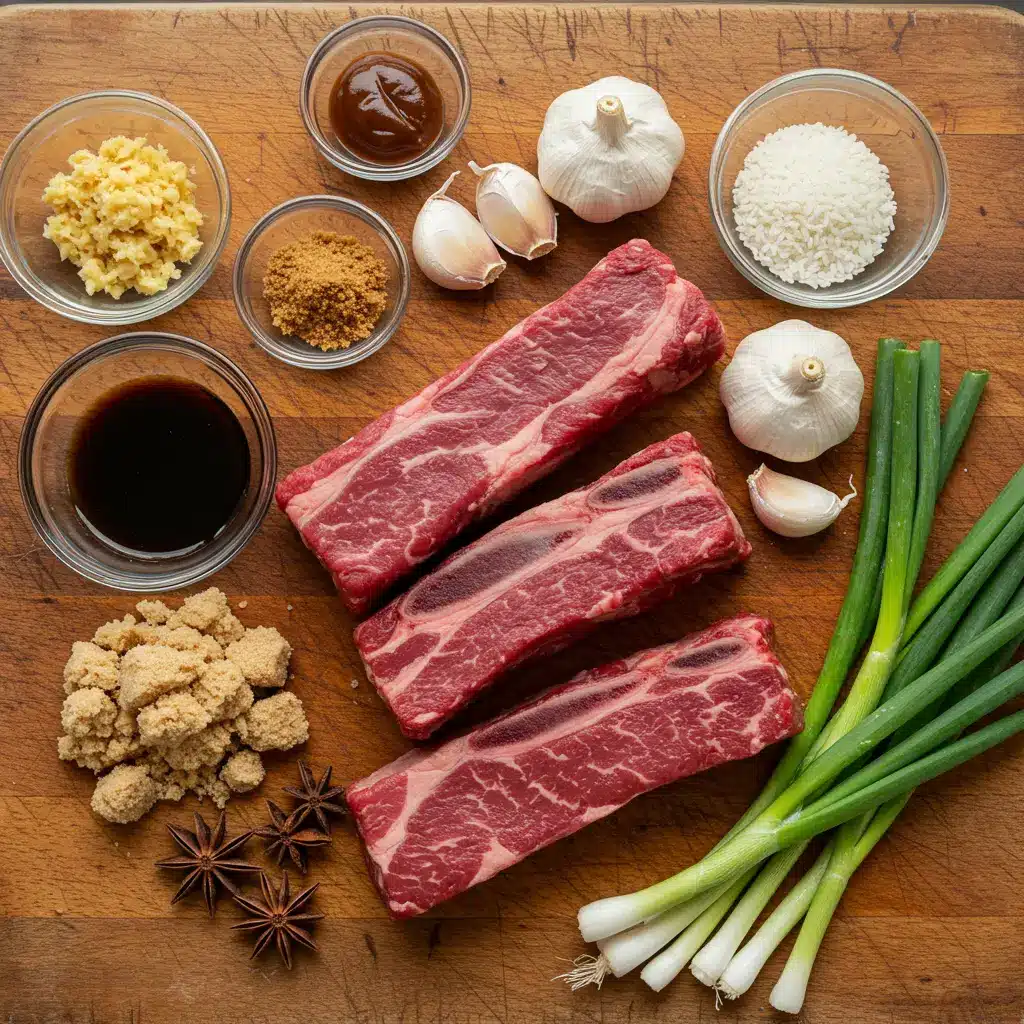
Ingredients Table:
| Ingredient | Amount & Notes |
|---|---|
| Beef short ribs (English-style) | 4 lbs (about 4-6 pieces), bone-in and well-marbled |
| Soy sauce | ½ cup, reduced-sodium |
| Brown sugar | ⅓ cup, packed |
| Hoisin sauce | ¼ cup |
| Rice vinegar | 3 tablespoons |
| Sesame oil (toasted) | 2 tablespoons |
| Fresh ginger | 3-inch piece, grated |
| Garlic cloves | 6 cloves, minced |
| Chinese five-spice powder | 1½ teaspoons |
| Beef stock | 2 cups, low-sodium |
| Star anise | 2-3 whole pods |
| Vegetable oil | 2 tablespoons |
| Scallions | 4, cut into 2-inch pieces for braising |
| Cornstarch | 2 tablespoons |
| Additional brown sugar | 2 tablespoons for the final glaze |
| Kosher salt & black pepper | To taste |
Ingredient Substitutions & Pro Tips
Asian pear (optional upgrade): Add ½ grated Asian pear to the marinade. It contains actinidin enzymes that naturally tenderize meat and add subtle sweetness.
Mirin instead of rice vinegar: Use 3 tablespoons mirin for a sweeter, less acidic profile.
Gochujang addition: Add 1-2 tablespoons Korean chili paste for spicy, fermented depth.
Shaoxing wine: Add ¼ cup for authentic Chinese restaurant flavor.
Equipment You’ll Need
- Large Dutch oven or heavy-bottomed oven-safe pot with lid (essential for even braising; 6-8 quart capacity)
- Tongs (for turning and handling hot short ribs)
- Small bowl (for mixing marinade/glaze)
- Instant-read thermometer (to check internal temp reaches 203-205°F)
- Fine-mesh strainer (for skimming fat from sauce)
- Basting brush (for applying final glaze)
Optional but helpful:
- Slow cooker (6-quart) if using that method
- Pressure cooker or Instant Pot for fast-track version
- Fat separator for easily removing grease from braising liquid
How to Make Caramelized Slow Roast Asian Beef Short Ribs: The 3-Stage Method
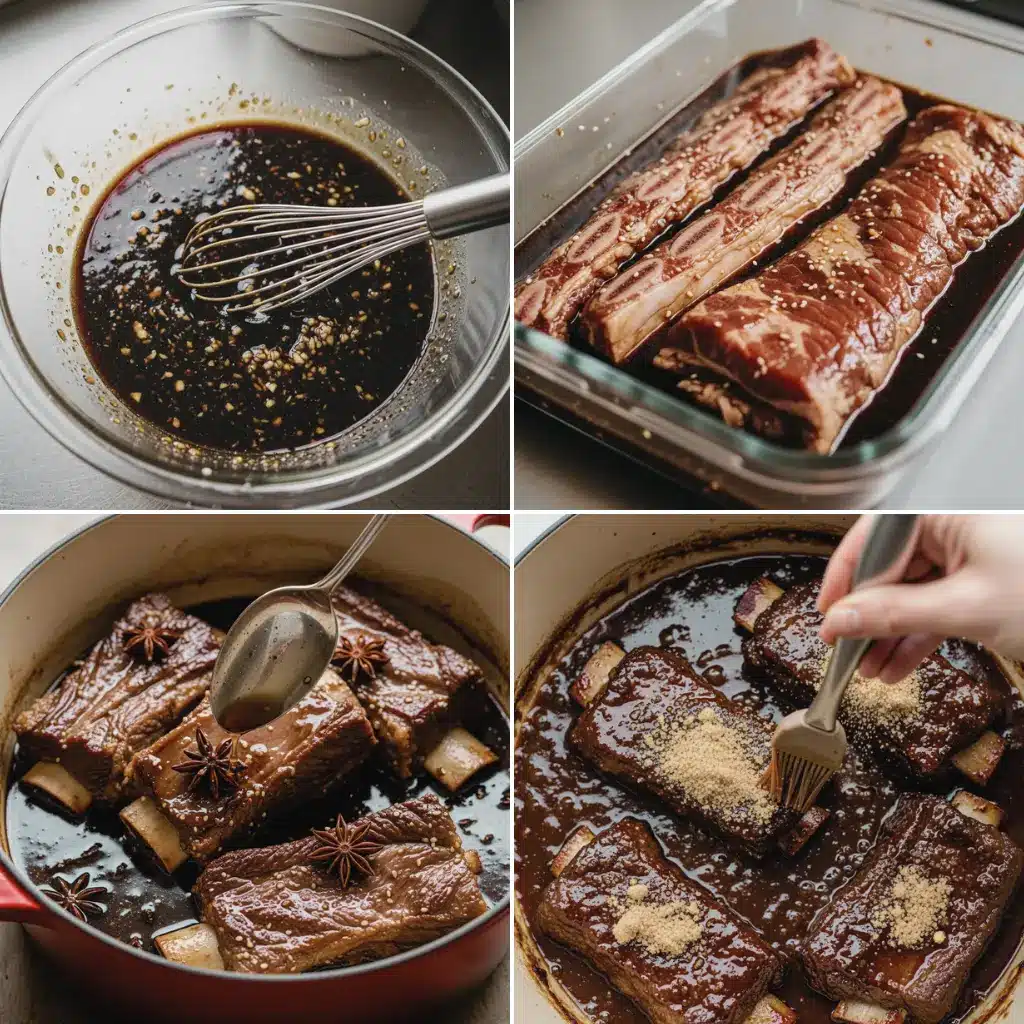
This recipe follows a proven three-stage framework that builds layers of flavor and ensures perfect tenderness every time.
Stage 1: The Flavor Foundation (Marination & Prep)
Step 1: Create the marinade base. In a medium bowl, whisk together ½ cup soy sauce, ⅓ cup brown sugar, ¼ cup hoisin sauce, 3 tablespoons rice vinegar, 2 tablespoons sesame oil, grated ginger, minced garlic, and Chinese five-spice powder. This combination of amino acids from soy sauce and sugars sets up both browning reactions and caramelization later.
Step 2: Marinate the short ribs. Pat the short ribs completely dry with paper towels (crucial for proper browning), then season generously with salt and black pepper. Place in a large zip-top bag or dish, pour half the marinade over them, and refrigerate for 4-8 hours or overnight. Reserve the other half of the marinade for later. Pro tip: The longer marination time (up to 48 hours) allows the acids and enzymes to break down tough muscle fibers, but even 4 hours makes a noticeable difference.
Stage 2: The Slow Braise (Collagen Conversion)
Step 3: Sear for deep browning. Preheat your oven to 325°F. Remove ribs from marinade (discard used marinade). Heat 2 tablespoons vegetable oil in a large Dutch oven over medium-high heat until shimmering. Working in batches if needed, sear the short ribs on all sides until deeply browned—about 3-4 minutes per side. This is critical: The high heat creates hundreds of new savory flavor compounds where amino acids and sugars meet. Don’t rush this step! Transfer seared ribs to a plate.
Step 4: Build the braising liquid. Reduce heat to medium. Add scallions and cook for 1-2 minutes until fragrant. Pour in the reserved marinade, 2 cups beef stock, and nestle in the star anise pods. Scrape up any browned bits from the bottom of the pot (that’s pure flavor!). Bring to a simmer.
Step 5: The low-and-slow transformation. Return the seared short ribs to the pot, nestling them into the braising liquid (they should be about half-submerged). Cover with a tight-fitting lid and transfer to the preheated oven. Braise for 2½ to 3 hours, checking occasionally. Target internal temperature: 195-205°F. At this temperature range, the tough collagen in the connective tissue converts to silky gelatin, creating that fall-apart texture. If you have a probe thermometer, insert it into the thickest part of the meat—when it slides in with absolutely no resistance, like warm butter, they’re ready.
Step 6: Rest and degrease. Carefully remove the pot from the oven. Use tongs to gently transfer the short ribs to a plate (they’ll be very tender, so handle carefully). Skim as much fat as possible from the surface of the braising liquid using a spoon or fat separator. This step ensures your final glaze isn’t greasy.
Stage 3: The Caramelized Finish (True Caramelization)
Step 7: Reduce the sauce. Place the Dutch oven on the stovetop over medium-high heat. Let the braising liquid simmer vigorously for 10-15 minutes until it reduces by about half and starts to thicken. Taste and adjust seasoning with salt or a splash more soy sauce if needed.
Step 8: Create the cornstarch slurry. In a small bowl, whisk together 2 tablespoons cornstarch with ¼ cup cold water until completely smooth. Slowly drizzle this into the simmering sauce while whisking constantly. The sauce will thicken to a glossy, coating consistency within 2-3 minutes.
Step 9: The final caramelization. Increase oven temperature to 400°F. Return the short ribs to the pot, spooning the thickened sauce over them generously. Sprinkle the tops with 2 tablespoons brown sugar. Return to the oven, uncovered, and roast for 20-30 minutes, basting every 10 minutes with the sauce. Here’s where true caramelization happens: At 400°F, the sugars on the surface of the meat reach 320-360°F (caramelization temperature), breaking down into hundreds of new flavor compounds and creating that dark, sticky, almost lacquered appearance. You’ll know they’re done when the ribs are “dark and sticky looking” with an almost burnished glaze.
Step 10: Serve and garnish. Remove from oven and let rest for 5 minutes. Serve the short ribs over steamed jasmine rice or with your favorite sides, spooning plenty of that gorgeous sauce over the top. Garnish with fresh cilantro, sliced scallions, and sesame seeds.
Love easy comfort food? Try our Cheesy Ground Beef and Rice Casserole next.
Expert Tips for the Best Caramelized Short Ribs
The Science of Caramelization vs. Browning
Understanding the difference between protein browning and true caramelization will transform how you cook not just short ribs, but countless other dishes.
Protein Browning (what happens during searing in Step 3):
- Occurs at temperatures between 280-330°F
- Requires both proteins (amino acids) and sugars
- Creates savory, meaty, complex flavors
- Responsible for the brown crust on seared meat
- Why it matters here: The soy sauce in our marinade is packed with amino acids (from fermented soybeans), which supercharges the browning when meat hits the hot pan
True Caramelization (what happens during the final glaze in Step 9):
- Occurs at higher temperatures, 320-360°F
- Only requires sugars (no proteins needed)
- Creates sweet, nutty, slightly bitter flavors
- Responsible for the dark, glossy, sticky coating
- Why it matters here: The brown sugar sprinkled on top in the final roasting stage reaches these higher temps in the 400°F oven, transforming into complex caramel flavors
Visual cues you’re getting it right:
- After searing: Deep brown crust with some darker spots (protein browning)
- After final glaze: Almost mahogany color with a shiny, lacquered appearance (caramelization)
Temperature Mastery Guide
| Stage | Target Temp | What’s Happening | Visual Cue |
|---|---|---|---|
| Searing | Surface: 350-400°F | Protein browning; crust formation | Deep golden-brown crust |
| Braising | Internal: 195-205°F | Collagen → gelatin conversion | Probe slides in like butter |
| Final Roast | Oven: 400°F Surface: 320-360°F | True sugar caramelization | Dark, sticky, glossy glaze |
Tested Cooking Method Comparison
After making these short ribs more than a dozen times using different methods, here’s my honest assessment:
Traditional Oven Method (My Preferred Method)
- Time: 3 hours braise + 30 min glaze
- Pros: Most even heat distribution; best control over final glaze; develops deepest flavor
- Cons: Longest total time; heats up kitchen
- Best for: Weekend cooking; when you’re home and can check occasionally
Slow Cooker Method
- Time: 7-8 hours on low
- Pros: True set-and-forget; impossible to overcook; perfect for busy weekdays
- Cons: Can’t sear in the same vessel; must finish under broiler for glaze
- Best for: Workday cooking; when you need completely hands-off
- Adaptation: Sear ribs in a skillet first. Add all marinade ingredients to slow cooker. Cook on low 7-8 hours. Transfer ribs to baking sheet, brush with reduced sauce + brown sugar, broil 5 minutes.
Pressure Cooker/Instant Pot Method
- Time: 45-50 minutes high pressure + 15 min glaze
- Pros: Fastest method by far; still incredibly tender; great for last-minute dinners
- Cons: Slightly less flavor depth; can’t build fond; sauce is thinner
- Best for: Weeknight emergency meals; when you forgot to plan ahead
- Adaptation: Sear using sauté function. Add marinade + stock. Pressure cook high 45 min, natural release 15 min. Remove ribs, reduce sauce on sauté, finish as directed.
Short Ribs Troubleshooting Decision Tree
Problem: Ribs are tough/chewy after cooking time
- ✓ Check internal temperature (should be 203-205°F, not lower)
- ✓ If under 195°F: Return to oven, covered, for another 30-45 minutes
- ✓ Check liquid level—if dry, add ½ cup stock and continue cooking
- ✓ Wrong cut used? Flanken-style ribs need completely different approach (quick grilling, not braising)
Problem: Ribs are dry and stringy
- ✓ Overcooked past 210°F (collagen completely dissolved and meat proteins tightened)
- ✓ Prevention: Use probe thermometer; stop at 203-205°F
- ✓ Fix for next time: If it happens, let cool in braising liquid overnight—some moisture will reabsorb
Problem: Bones falling out completely
- ✓ This is actually normal and a sign of proper tenderness!
- ✓ If membrane was removed, bones slide out more easily (optional choice)
- ✓ For presentation, use toothpicks to keep bone attached when plating
Problem: Sauce is too thin/watery
- ✓ Didn’t reduce enough in Step 7 (should simmer 10-15 min)
- ✓ Quick fix: Make cornstarch slurry (2 tbsp cornstarch + ¼ cup cold water), whisk into simmering sauce
- ✓ Alternative fix: Beurre manié (1 tbsp butter mashed with 1 tbsp flour), whisk in gradually
Problem: Not enough glaze/caramelization on final ribs
- ✓ Oven temp too low for Stage 3 (must be 400°F for true caramelization)
- ✓ Insufficient brown sugar on top
- ✓ Didn’t baste frequently enough (needs basting every 10 min)
- ✓ Quick fix: Switch to broiler for final 3-5 minutes, watch carefully to prevent burning
Problem: Sauce tastes flat or one-dimensional
- ✓ Didn’t build fond properly during searing (Step 3)
- ✓ Not enough salt—braised dishes need generous seasoning
- ✓ Add finishing touches: splash of rice vinegar for acidity, drizzle of sesame oil for aroma, or pinch of Chinese five-spice
Problem: Too greasy/fatty sauce
- ✓ Didn’t skim fat in Step 6
- ✓ Fix: Refrigerate sauce overnight—fat solidifies on top for easy removal
- ✓ Quick fix: Drag ice cubes in ladle across surface—fat solidifies and sticks to cold ladle
Make-Ahead Meal Prep Strategy
These short ribs are actually better when made ahead, as the flavors have time to meld and intensify.
Option 1: Marinate in Advance
- Marinate ribs up to 48 hours ahead for maximum tenderness
- Store in refrigerator in sealed bag or covered dish
- Bring to room temp 30 minutes before searing
Option 2: Cook Day-Before for Entertaining (My Favorite!)
- Complete Steps 1-6 (through the braising stage)
- Let ribs cool in braising liquid for 30 minutes
- Refrigerate overnight in the pot, covered
- Why this works: Fat rises to top and solidifies, making it trivial to remove. Flavors meld overnight. Meat reabsorbs moisture.
- Day of serving: Remove fat layer, reheat in 325°F oven for 30-40 minutes covered, then proceed with Stage 3 (final glaze)
- Benefit: All the messy prep work is done, you just do the final impressive glaze when guests arrive
Option 3: Freezer Meal Prep
- Complete entire recipe through Step 10
- Let cool completely
- Portion into individual freezer-safe containers with sauce
- Label and freeze for up to 3 months
- To reheat: Thaw overnight in fridge. Reheat in covered dish at 300°F for 25-30 minutes until warmed through. The low temp prevents drying out.
Reheating Best Practices
- Never microwave (makes meat rubbery and tough)
- Best method: Oven at 300-325°F, covered with foil, 20-30 minutes
- Keep moist: Always reheat with some of the braising sauce
- Refresh the glaze: After reheating, brush with fresh sauce and broil 2-3 minutes for renewed sticky coating
Looking for more make-ahead meals? Our Sausage and Sweet Potatoes is another weeknight winner.
What to Serve With Caramelized Asian Beef Short Ribs
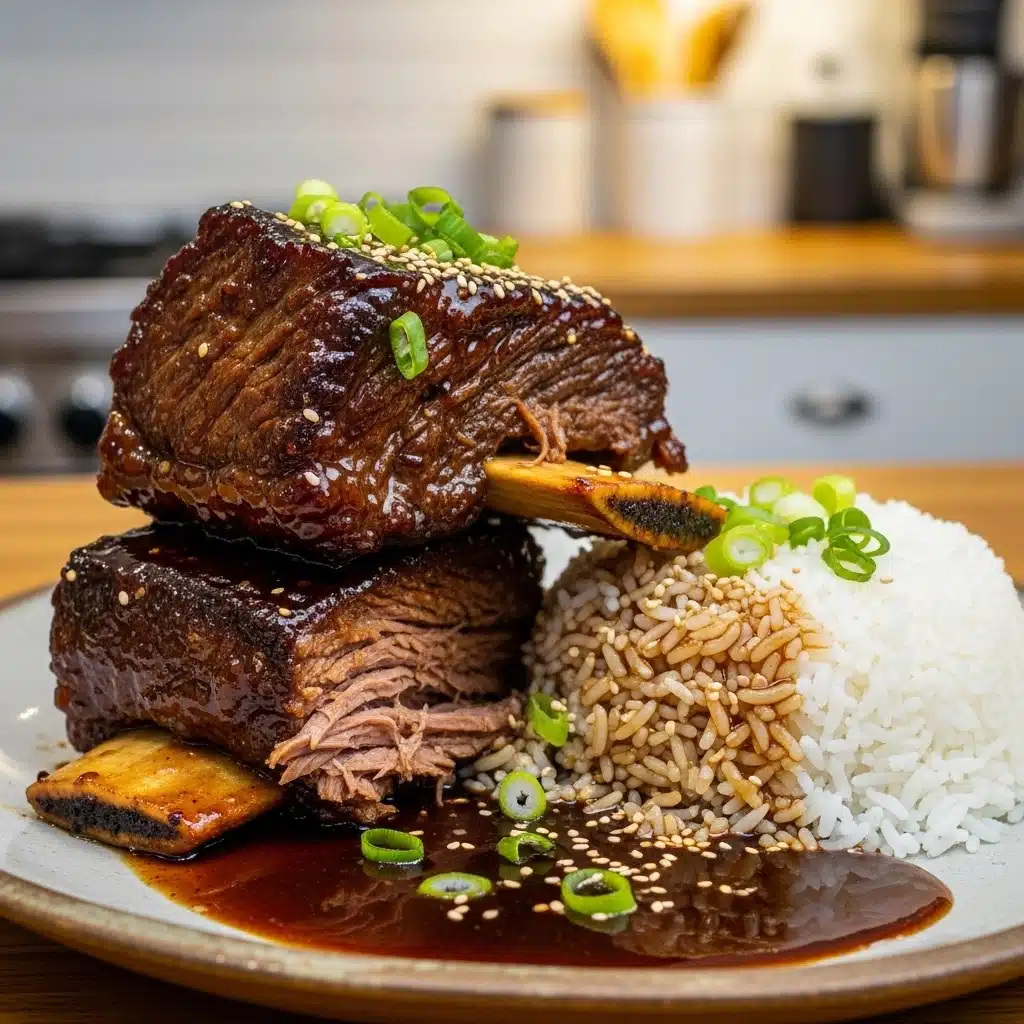
The rich, intensely flavored sauce on these short ribs needs the right accompaniments to balance and complete the meal.
Steamed Jasmine Rice (The Essential Base)
The fluffy, slightly sticky texture of jasmine rice is absolutely perfect for soaking up every drop of that gorgeous caramelized sauce. Cook it simply—no butter, no salt—so it doesn’t compete with the bold flavors. White rice, brown rice, or even cauliflower rice all work beautifully.
Asian Vegetable Sides
- Steamed bok choy or gai lan (Chinese broccoli) with a drizzle of sesame oil
- Sautéed sugar snap peas with garlic and ginger
- Smashed cucumber salad dressed with rice vinegar and chili oil for cooling contrast
- Stir-fried green beans with garlic and a touch of oyster sauce
Kimchi or Quick-Pickled Vegetables
The tangy, fermented bite of kimchi cuts through the richness perfectly. If kimchi isn’t your thing, quick-pickled daikon radish or cucumbers provide similar brightness.
Soft Bao Buns for Serving
For a fun twist, shred the tender short rib meat and serve it in steamed bao buns with fresh cilantro, sliced scallions, and pickled vegetables. It’s an interactive, crowd-pleasing way to serve these at gatherings.
Wine Pairing Recommendations
The sweet-savory profile and caramelized glaze pair beautifully with:
- California Zinfandel: Bold fruit flavors stand up to the rich meat and echo the brown sugar sweetness
- Argentinian Malbec: Smooth tannins and dark fruit notes complement the soy-based sauce
- Oregon Pinot Noir: Lighter body with earthy undertones balances the Asian spices without overwhelming
For another rice-based comfort meal, try our Easy Garlic Butter Shrimp and Rice.
Storing and Reheating Tips
Refrigerator Storage: Store leftover short ribs in an airtight container submerged in their braising sauce for up to 4 days. The sauce keeps the meat moist and the flavors continue to develop.
Freezer Storage: Portion short ribs into individual freezer-safe containers or heavy-duty freezer bags with sauce. Remove as much air as possible to prevent freezer burn. Label with date and freeze for up to 3 months.
Reheating from Refrigerator: Place short ribs and sauce in a covered oven-safe dish. Reheat at 325°F for 25-30 minutes until warmed through. For best results, refresh the glaze by brushing with a bit of hoisin mixed with brown sugar and broiling for 2-3 minutes.
Reheating from Frozen: Thaw overnight in refrigerator, then reheat as directed above. Never microwave, as it makes the meat rubbery and tough.
Pro Tip: If you’re reheating and the sauce has thickened too much, thin it with a splash of beef stock or water until it reaches the desired consistency.
Nutrition Facts
Approximate per serving (based on 6 servings):
Calories: 625 kcal
Protein: 48 g
Fat: 38 g (Saturated: 16 g)
Carbohydrates: 22 g
Fiber: 1 g
Sugar: 16 g
Sodium: 980 mg
Cholesterol: 165 mg
Note: Nutritional values are estimates and will vary based on specific brands and ingredients used. Values do not include rice or side dishes.
FAQs About Caramelized Slow Roast Asian Beef Short Ribs
What’s the difference between English-style and flanken-style short ribs?
English-style ribs are cut parallel to the bone with one thick bone per piece, perfect for braising. Flanken-style are cut across the bone showing 3-4 thin bone cross-sections, ideal for quick grilling.
Can I make this in a slow cooker?
Absolutely! Sear the ribs in a skillet first, then add everything to your slow cooker and cook on low for 7-8 hours. Finish by brushing with glaze and broiling for 5 minutes.
Do I need to remove the membrane from short ribs?
For English-style braised ribs, leave it on—it helps hold the meat together during long cooking. Remove it only if you want bones to slide out easily for presentation.
What internal temperature should short ribs reach?
Target 195-205°F internal temperature. At this range, collagen transforms into gelatin, creating that fall-apart tender texture. Test by inserting a probe—it should slide in like butter.
Why are my short ribs tough even after hours of cooking?
They likely haven’t reached the proper internal temp of 203-205°F. Continue cooking, covered, checking every 30 minutes. Ensure there’s enough liquid so they don’t dry out during extended cooking.
Can I use boneless short ribs instead?
Yes! Boneless short ribs work great but cook slightly faster—check for tenderness at 2 hours instead of 2.5-3 hours. They won’t add as much flavor to the sauce though.
What can I substitute for hoisin sauce?
Mix 2 tablespoons each of soy sauce, peanut butter, and honey with 1 teaspoon sesame oil. It won’t be identical but provides similar sweet-savory depth.
How do I thicken the braising sauce?
After removing the ribs, simmer the sauce to reduce it, then whisk in a cornstarch slurry (2 tablespoons cornstarch mixed with ¼ cup cold water) until glossy and thick.
Can I make these ahead for a dinner party?
Yes! They’re actually better made a day ahead. Complete through the braising stage, refrigerate overnight, skim fat, then reheat and do the final glaze before serving.
What sides pair best with Asian short ribs?
Steamed jasmine rice is essential to soak up the sauce, plus steamed bok choy, smashed cucumber salad, or kimchi for tangy contrast to the rich meat.
How long can I marinate the short ribs?
Minimum 4 hours, but 8-24 hours is ideal for maximum tenderness and flavor. Don’t exceed 48 hours as acids can make the texture mushy.
Final Thoughts
These Caramelized Slow Roast Asian Beef Short Ribs are the kind of recipe that makes you feel like a culinary rock star with surprisingly minimal effort. The three-stage method—building flavor through marination, transforming texture through low-and-slow braising, and creating that stunning glossy finish through high-heat caramelization—delivers restaurant-quality results every single time. Whether you’re making these for a special Sunday dinner, meal prepping for the week ahead, or impressing guests at your next dinner party, this recipe has become one of my absolute go-to comfort foods. The best part? It tastes even better the next day, which means less stress and more time enjoying the company of the people you’re feeding.
For more impressive yet achievable comfort food recipes, explore our collection of Traditional Bread Pudding and other family favorites.
Stay in the kitchen loop—follow us on Facebook & Pinterest.

Caramelized Slow Roast Asian Beef Short Ribs
Ingredients
Method
- Create Marinade: Whisk together soy sauce, ⅓ cup brown sugar, hoisin, vinegar, sesame oil, ginger, garlic, and five-spice powder.
- Marinate Ribs: Pat ribs dry, season with salt and pepper. Marinate in half the marinade for 4-8 hours. Reserve the other half.
- Sear Ribs: Preheat oven to 325°F. Sear ribs in a Dutch oven on all sides until deeply browned. Remove ribs.
- Build Braising Liquid: Sauté scallions, then add reserved marinade, beef stock, and star anise. Bring to a simmer.
- Braise: Return ribs to pot, cover, and oven-braise for 2.5-3 hours until fork-tender (195-205°F).
- Degrease: Remove ribs and skim fat from the liquid.
- Reduce Sauce: Simmer the liquid on the stovetop until reduced by half.
- Thicken Sauce: Whisk in a cornstarch slurry (2 tbsp cornstarch + ¼ cup cold water) until glossy.
- Caramelize: Increase oven to 400°F. Return ribs to the pot, coat with sauce, sprinkle with 2 tbsp brown sugar. Roast for 20-30 minutes, basting often, until sticky.
- Serve: Rest for 5 minutes, then serve over rice and garnish.