Stuffed French toast transforms ordinary breakfast into a restaurant-worthy indulgence—thick slices of golden-brown bread hiding pockets of cream cheese and berries, all crisped to perfection in butter and drizzled with warm maple syrup. It’s simpler than you’d think, costs way less than brunch out, and delivers that “wow, you made THIS?” reaction every single time.
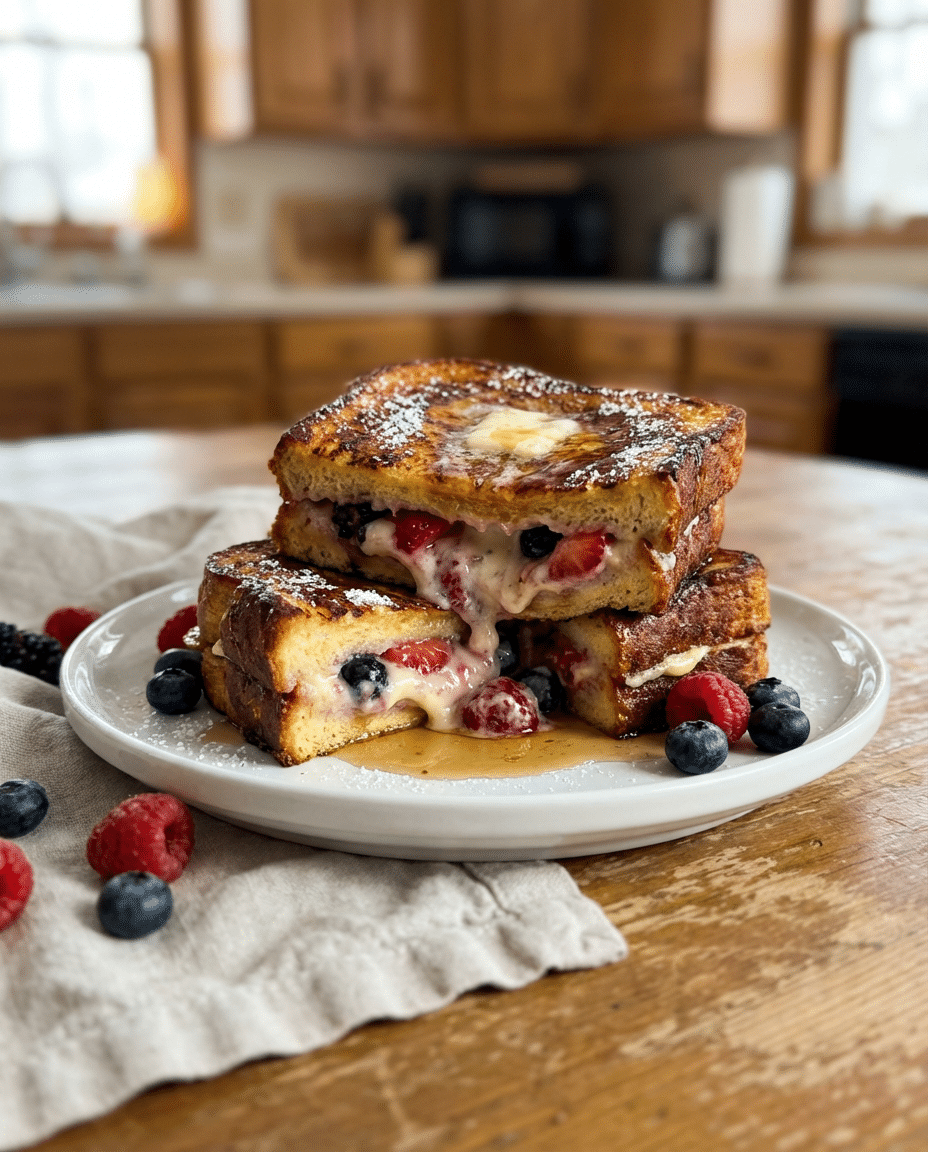
This isn’t your everyday breakfast—it’s the kind of morning treat that makes weekends feel special. I’ve been making stuffed French toast for years, tweaking the custard ratio and testing fillings until I landed on this foolproof recipe that works whether you’re feeding your family or impressing guests at a Mother’s Day brunch.
Key Takeaways
- Quick assembly: Takes just 10 minutes of prep with ingredients you likely already have
- Budget-friendly luxury: Costs under $10 to make at home versus $15+ per plate at restaurants
- Endlessly customizable: Switch from sweet cream cheese and berries to savory spinach and feta
- Make-ahead friendly: Assemble the night before and cook fresh in the morning
- Pairs perfectly with our Baked Apple Cinnamon Cottage Cheese for a protein-packed brunch spread
Why You’ll Love This Stuffed French Toast
- You’ll love the crispy-creamy contrast: That first bite gives you a golden, buttery crust that gives way to a luscious, cool cream cheese filling—it’s texture heaven
- It feels fancy but honestly isn’t: If you can make regular French toast, you can absolutely make this (promise!)
- Packed with protein from eggs and cream cheese, keeping you fuller longer than typical carb-heavy breakfasts
- Kids actually ask for seconds: Even picky eaters love the “surprise inside” factor
- It’s Instagram-ready without trying: Stack ’em high, drizzle some syrup, dust with powdered sugar, and you’ve got a photo that’ll make your followers drool
- Perfect for special mornings: Whether it’s a birthday breakfast, holiday brunch, or just because it’s Saturday and you deserve something delicious
- Freezer-friendly for busy weeks: Make a double batch and reheat individual slices whenever you need a quick luxe breakfast
Food and Cultural Background
The first time I had stuffed French toast was at a tiny brunch café in Portland about eight years ago. I remember cutting into what looked like thick-cut French toast, and suddenly this ribbon of mascarpone and raspberry preserves oozed out. I was hooked instantly—and maybe a little annoyed I’d been making plain French toast all those years without knowing this existed!
Turns out, stuffed French toast has roots in old-world cooking. While classic French toast (or pain perdu, meaning “lost bread”) dates back to ancient Rome as a way to salvage stale bread, the stuffed version likely evolved from European stuffed pastries and blintzes. Someone brilliant realized you could hide sweet fillings inside bread the same way you’d fill a crepe or Danish, then treat it like French toast. Genius, right?
These days, you’ll find stuffed French toast on brunch menus everywhere—from diners serving it with strawberry cream cheese to upscale spots offering mascarpone and fig jam versions. But honestly, the homemade version beats them all because you control exactly what goes inside. Plus, if you love experimenting with breakfast like I do (check out my High-Protein Breakfast Biscuits for another morning favorite), this recipe becomes your creative playground.
Ingredients for Stuffed French Toast
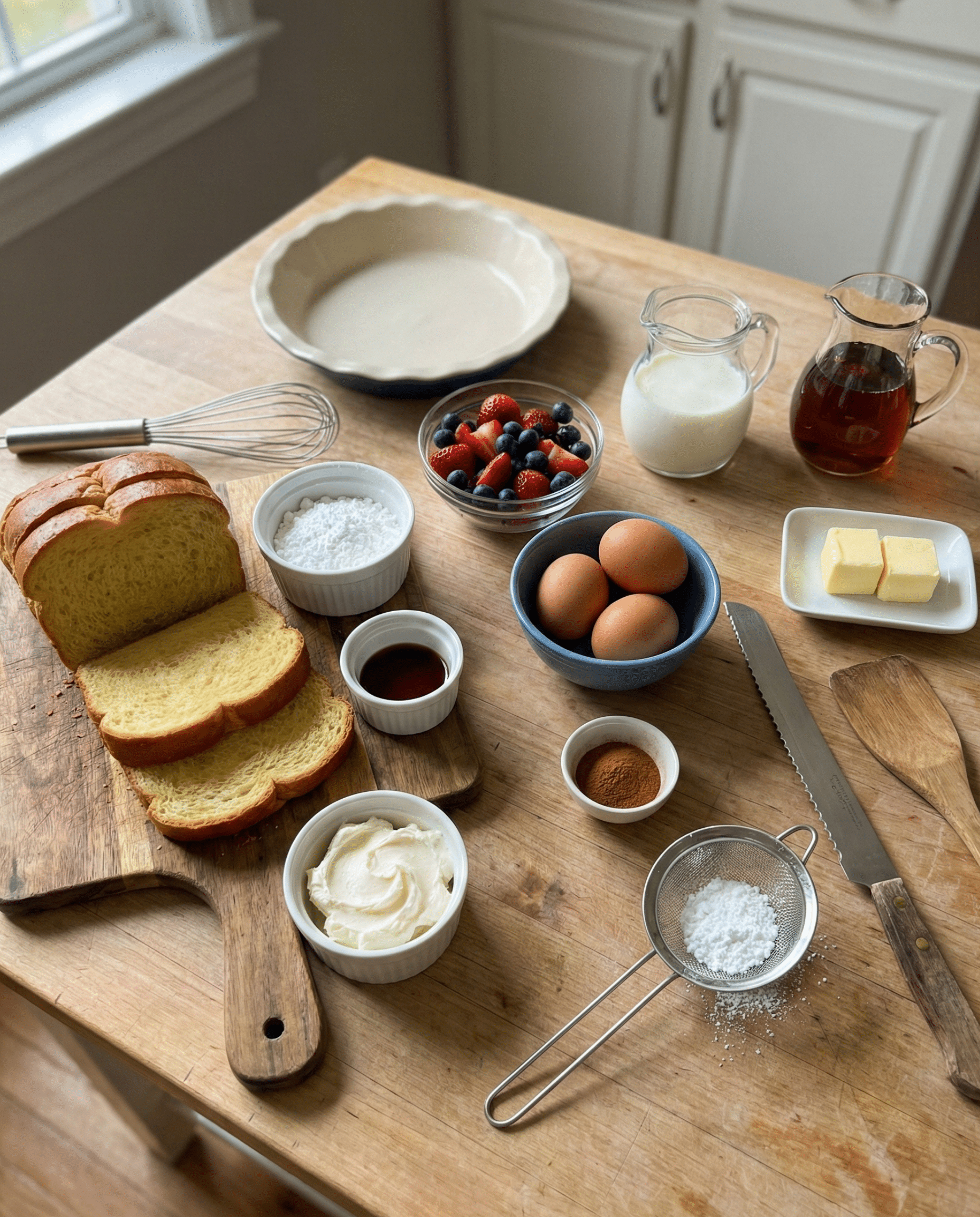
| Ingredient | Notes/Substitutes |
|---|---|
| 4 thick slices brioche or challah bread (1.5″ thick) | Day-old bread works best—less soggy. Substitute: Texas toast, thick-cut white bread, or even sourdough for tang |
| 4 oz cream cheese, softened | Must be room temp for smooth mixing. Vegan option: dairy-free cream cheese; Lighter option: Neufchâtel cheese |
| 2 tbsp powdered sugar | For the filling. Substitute: monk fruit sweetener for keto |
| 1 tsp vanilla extract | Pure vanilla only—imitation just doesn’t deliver. Substitute: almond extract for a nutty twist |
| ½ cup fresh berries (strawberries, blueberries, raspberries) | Fresh is ideal; frozen works if thawed and drained well |
| 3 large eggs | Room temperature blends smoother. Vegan: use flax eggs (3 tbsp flaxmeal + 9 tbsp water) |
| ½ cup whole milk | Makes the custard rich. Substitute: almond milk, oat milk, or half-and-half for extra decadence; dairy-free milk works for lactose-free |
| 1 tsp cinnamon | Freshly ground tastes best. Add a pinch of nutmeg for warmth |
| 2 tbsp butter (for cooking) | Salted or unsalted both work. Substitute: coconut oil or ghee for dairy-free |
| Maple syrup & extra berries (for serving) | Pure maple syrup is worth it—no pancake syrup here! Gluten-free note: verify bread is certified GF |
Looking for more ways to use that thick French bread? It’s also perfect for elevated avocado toast!
Equipment Needed
- Large mixing bowl (for the filling)
- Shallow dish or pie plate (for the egg mixture—a 9″ pie plate is perfect)
- Whisk or fork (to beat the eggs and milk)
- Sharp serrated knife (crucial for cutting clean pockets without tearing)
- Non-stick skillet or griddle (10-12″ works best; cast iron also great for even heat)
- Spatula (wide, sturdy one for flipping without breaking)
- Measuring cups and spoons
- Optional but helpful: Electric hand mixer (makes the cream cheese filling ultra-smooth), toothpicks (to seal overstuffed pockets), cooling rack (for keeping cooked toast crispy while you finish the batch)
How to Make Stuffed French Toast Step-by-Step
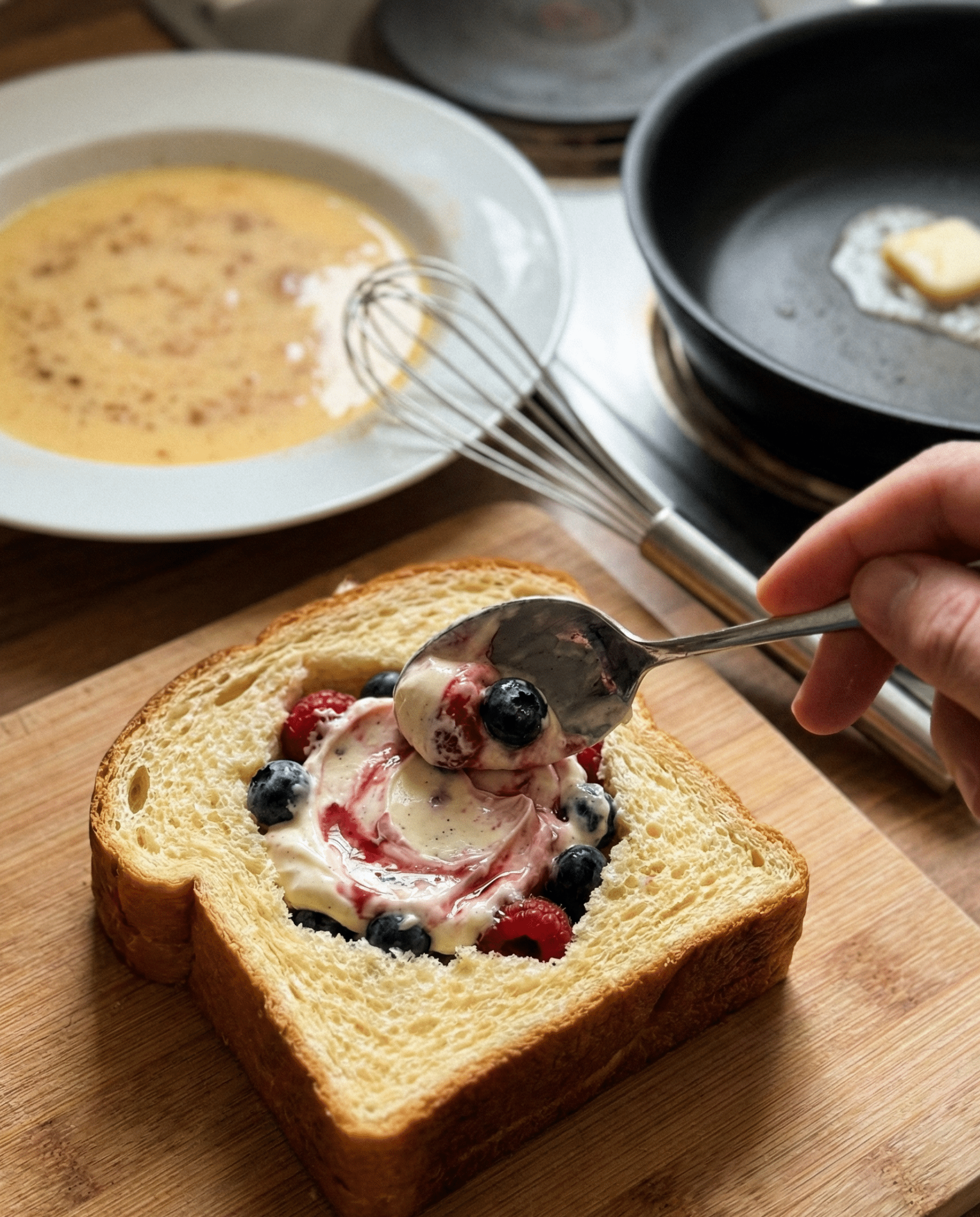
- Prepare your cream cheese filling: In a medium bowl, beat the softened cream cheese, powdered sugar, and vanilla extract until completely smooth and fluffy (about 2 minutes with a hand mixer, or 3-4 minutes whisking by hand). Gently fold in your fresh berries—don’t overmix or they’ll break down and make the filling watery. Set aside while you prep the bread.
- Cut pockets in your bread slices: Using a sharp serrated knife, carefully cut a horizontal slit into the side of each thick bread slice, creating a pocket. Go almost all the way through, but leave about ½ inch sealed on the other three edges—this keeps your filling from escaping during cooking. Think of it like making a pita pocket.
- Stuff each slice generously but carefully: Spoon 2-3 tablespoons of your cream cheese mixture into each pocket, spreading it evenly inside with the back of the spoon. Don’t overstuff (I learned this the hard way with filling oozing everywhere!)—you want it plump but still able to close. Press the opening gently to seal, and if needed, secure with a toothpick.
- Make your custard mixture: In a shallow dish, whisk together the eggs, milk, and cinnamon until fully combined and slightly frothy. This should take about 30 seconds of vigorous whisking—you want no streaks of egg white visible.
- Heat your skillet just right: Melt 1 tablespoon of butter in your non-stick skillet over medium heat. When it’s bubbling gently but not browning, you’re at the perfect temperature. Too hot and you’ll burn the outside before the inside cooks; too low and you’ll get soggy toast (check out my full guide on avoiding soggy French toast for more tips).
- Dip and cook your stuffed slices: Working with one or two slices at a time (depending on your pan size), dip each stuffed slice into the custard mixture for about 10 seconds per side—just enough to coat, not soak. Immediately transfer to the hot skillet and cook for 3-4 minutes per side, until deep golden brown and crispy. You’ll know it’s ready to flip when the edges look set and the bottom is that gorgeous caramel color.
- Serve immediately for best results: Transfer your cooked stuffed French toast to plates (or a wire rack if making multiple batches), dust generously with powdered sugar, drizzle with warm maple syrup, and top with extra fresh berries. Honestly, this is when it’s at its absolute best—that contrast between the hot, crispy exterior and the cool, creamy filling is chef’s kiss.
Expert Tips for the Best Results
- Don’t skip the thick bread: Regular sandwich bread just can’t handle the filling weight and custard soak. You need bread that’s at least 1.5 inches thick—I usually buy unsliced loaves from the bakery section and cut my own slices. Trust me, it makes all the difference.
- Here’s a little trick I’ve learned about sealing: If your pockets won’t stay closed, run a fork along the cut edges before dipping in the custard. Those little tine marks help create a seal when the egg cooks, kind of like crimping a pie crust.
- Temperature control is everything: Medium heat gives you time for that custard to cook through and set the filling without burning the outside. If your heat’s too high, you’ll end up with a raw center (not good with eggs!) and a charred exterior. Too low? Soggy, pale toast that lacks that signature crispiness.
- The overnight make-ahead secret: Assemble your stuffed slices the night before, wrap individually in plastic wrap, and refrigerate. In the morning, just dip and cook—the chilled filling actually holds together better during cooking. (This also lets you sleep in a bit on weekend mornings, which is always a win.)
- Don’t crowd your pan: Leave at least an inch between slices so you can flip easily and the steam can escape. Crowding traps moisture and prevents that crispy crust from forming properly.
- For the ultimate texture, finish your cooked slices in a 200°F oven on a wire rack while you cook the rest—they stay warm and crispy instead of getting soggy on a plate. (I learned this from years of making Classic Waffles for a crowd!)
What to Serve With Stuffed French Toast
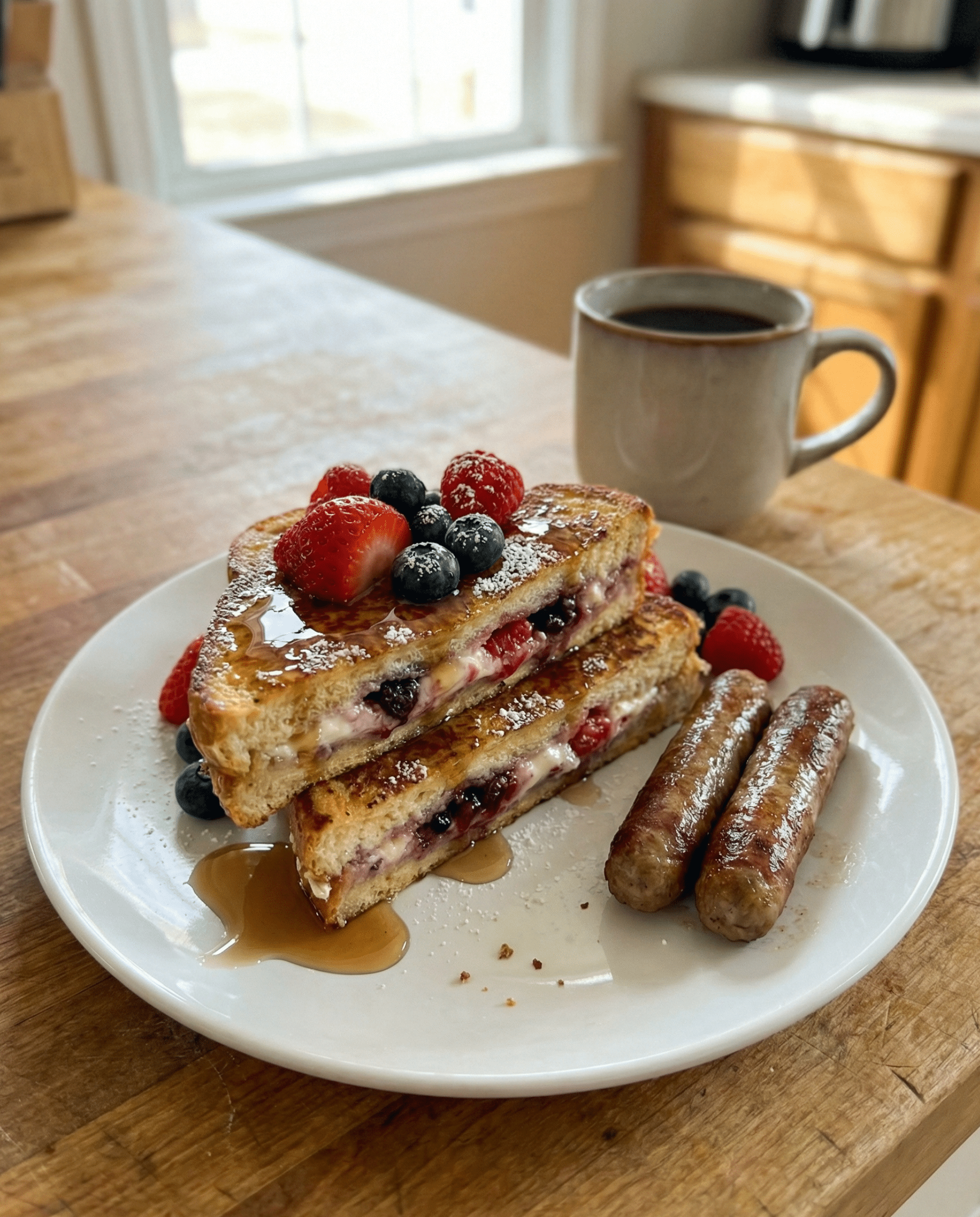
- Savory breakfast sausage: The salty-sweet combo is absolutely unbeatable—I always make a full pound because people devour it
- Fresh fruit salad: A simple mix of melon, grapes, and citrus provides a light, refreshing contrast to the rich stuffed toast
- Maple-glazed breakfast potatoes or hash browns: For those who want a heartier, more substantial brunch plate
- Whipped cream or Greek yogurt: A dollop on top adds extra creaminess (and the yogurt sneaks in some protein)
- Hot coffee or fresh-squeezed orange juice: Classic brunch drinks that everyone expects and loves
- A simple green side salad with lemon vinaigrette if you’re serving the savory spinach-feta variation (yes, stuffed French toast absolutely works as a savory dish—try my Crispy Chicken Caesar Sandwich for more savory brunch inspiration!)
Storing and Reheating Tips
- Refrigerator storage: Let your cooked stuffed French toast cool completely to room temperature first (about 20-30 minutes), then store in an airtight container with parchment paper between slices to prevent sticking. It’ll keep for up to 2 days, though honestly it’s best within the first 24 hours.
- Freezer method for meal prep: Flash-freeze assembled but uncooked stuffed slices on a parchment-lined baking sheet for 2 hours, then transfer to freezer bags with parchment separators. They’ll keep for up to 1 month. Cook straight from frozen—just add 1-2 extra minutes per side.
- Reheating for that just-made texture: Oven method is best (350°F for 8-10 minutes on a wire rack keeps it crispy); air fryer works beautifully too (320°F for 4-5 minutes). Microwave in a pinch (30 seconds, then crisp it up in a dry skillet), but I won’t lie—it’s not ideal.
- Pro tip: Freeze extra cream cheese filling separately in ice cube trays, then pop out and store in a freezer bag. When you want stuffed French toast, thaw one or two cubes overnight—instant filling ready to go!
Nutrition Facts
Based on 1 slice with cream cheese-berry filling (¼ of recipe)
| Nutrient | Amount per Serving |
|---|---|
| Calories | 385 kcal |
| Total Fat | 18g |
| Saturated Fat | 9g |
| Trans Fat | 0g |
| Cholesterol | 165mg |
| Sodium | 420mg |
| Total Carbohydrates | 45g |
| Dietary Fiber | 2g |
| Total Sugars | 22g |
| Protein | 11g |
| Vitamin D | 15% DV |
| Calcium | 12% DV |
| Iron | 10% DV |
| Potassium | 6% DV |
*Nutrition information is estimated using USDA FoodData Central and may vary based on specific ingredients and cooking methods used.
FAQs About Stuffed French Toast
Can I make stuffed French toast ahead for a crowd?
Absolutely! Assemble your stuffed slices the night before, wrap tightly in plastic wrap, and refrigerate. In the morning, let them sit at room temperature for 10 minutes while you make your custard, then dip and cook as directed. You can also keep cooked slices warm in a 200°F oven on a wire rack for up to 30 minutes while you finish the batch.
What’s the best bread for stuffed French toast?
Brioche and challah are my top picks because they’re sturdy, slightly sweet, and have that rich, eggy texture that soaks up custard perfectly without falling apart. Day-old bread actually works better than fresh because it’s slightly drier and holds up to the filling and egg mixture without getting too soggy.
Can I use frozen berries in the filling?
You can, but you’ll need to thaw them completely and drain them really well—preferably on paper towels for about 30 minutes. Frozen berries release a lot of liquid as they thaw, which can make your cream cheese filling runny and cause it to leak out during cooking. Fresh berries are honestly worth it for this recipe.
How do I keep the filling from leaking out?
Don’t overstuff (2-3 tablespoons max per slice), make sure you’re leaving at least ½ inch sealed on the edges when cutting your pocket, and don’t oversoak in the custard—10 seconds per side is plenty. If you’re still having issues, secure the opening with a toothpick before dipping, then remove it before serving.
Can I make stuffed French toast without eggs?
Yes! For a vegan version, use flax eggs (1 tablespoon ground flaxseed mixed with 3 tablespoons water per egg—let it sit 5 minutes to gel), dairy-free milk, vegan cream cheese, and vegan butter. The texture will be slightly different but still delicious. Make sure your bread is egg-free too (most regular white bread is; check labels on brioche).
What other fillings can I try besides cream cheese and berries?
Oh, so many options! Nutella and sliced bananas is a crowd favorite, peanut butter and jelly is surprisingly amazing, ricotta with lemon zest and honey is elegant, or go savory with scrambled eggs and cheese. I’ve even stuffed it with leftover cinnamon apple filling from apple cake—it was incredible.
How do I know when stuffed French toast is fully cooked inside?
The outside should be deep golden brown and crispy, and when you press the center gently with your spatula, it should feel firm and set, not jiggly. If you’re worried, use an instant-read thermometer—the center should reach 160°F to ensure the eggs are fully cooked. You can also cut one open to check before serving the rest.
Why does my stuffed French toast turn out soggy?
Three main culprits: bread that’s too fresh/soft (use day-old), soaking too long in the custard (max 10 seconds per side), or heat that’s too low. Medium heat is key—you need that immediate sizzle when the bread hits the pan to create a seal and crispy crust. Check out my complete guide on avoiding soggy French toast for all the science behind it!
Final Thoughts
Here’s what I know after making stuffed French toast hundreds of times: it’s one of those recipes that looks and tastes way more complicated than it actually is. And that’s the best kind, right? Whether you’re making it for a lazy Sunday morning, a special birthday breakfast, or hosting your first big brunch, this recipe delivers that “wow” moment without the stress.
The beauty of stuffed French toast is that once you nail the basic technique—cut, stuff, dip, cook—you can customize it endlessly. Sweet or savory, simple or fancy, traditional or totally creative, it adapts to whatever you’re craving or whatever you have in your fridge.
Next time you’re planning breakfast, pair this with my Lemon Glazed Blueberry Boyfriend Bait for a brunch spread that’ll have everyone asking when you’re opening a restaurant!
Want more delicious breakfast inspiration delivered straight to your feed? Come hang out with me over on Pinterest where I share fresh recipe ideas, kitchen tips, and drool-worthy food photos daily. And don’t forget to join our growing community on Facebook—I love seeing your cooking wins, answering your questions, and getting to know you all better. Trust me, you’ll find tons of recipe ideas to fill your weekends with delicious memories!
Now go grab that thick-cut brioche and make some breakfast magic happen. Can’t wait to see how yours turns out!